Travel
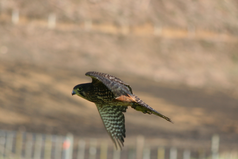 The Wingspan Centre, situated at the rear of Mt Ngongotaha just two kilometres off State Highway 55 heading into Rotorua is a conservation programme that is regarded as nationally significant in being New Zealand’s first and only bird of prey centre. Featuring falcons, hawks and owls, the raptors are on show at the Wingspan Centre, creating a close, natural habitat where they can be observed and where people can see closeup through the art of falconry, how some of these beautiful birds operate. It is a unique project – a charitable trust funded entirely by donations and sponsorship, and operated by dedicated volunteers.
New Zealand has lost many of its native species in terms of birds of prey and those that remain are all on the endangered species list. The permanent loss of such birds as Te Hokioi the ‘Haast Eagle’ (Harpagornis moorei), the largest flying bird ever recorded, weighing over 14kg with a wingspan up to three metres cannot be undone, but with the drive by the Department of Conservation and The Wingspan Centre, the hope is to halt the loss of any more birds such as the Eyles Harrier (‘Circus eylesi‘) Whekau (‘Sceloglaux albifacies‘) the ‘Laughing Owl’ (which ran down its prey on foot and is now believed extinct) and the still-surviving one most often seen in our local area, karearea, the New Zealand falcon.
There is an obvious focus on the karearea. While featured on our $20 note, it is a bird that is little known, rarely seen and very much a threatened species; moreso perhaps than the much more known kiwi. Debbie Stewart, Manager of the Wingspan Centre says, “These are incredible birds, found nowhere else in the world and few people have the opportunity to see them. We’re hoping this programme will change that”.
Visitors to the Centre are able to view a museum area and sneak previews into the incubation and service areas, before entering the main aviary – a landscaped all weather walkway. With themed native plants, large aviaries, and complementary signage, it is a very impressive facility of international standard.
The Centre focuses on rehabilitating injured birds back to the wild and is in the process of captive breeding, with a view to increasing the margins of young birds released back to the bush.
A real highlight at the Centre is the training of the falcons over the surrounding farmland each afternoon. The age-old art of falconry is practiced as a method to prepare birds for release into the wild. The free flying falcons as are a highlight and visitors are impressed by their fast flight, steep climbs and stoops. It is indeed a high impact close encounter that simply shouldn’t be missed.
This is a programme that has quietly operated for almost 20 years and in October 2004 the Centre was formally opened for visitors. The best time to be there is from 1.30 on, as the birds are brought out and their flying using falconry is demonstrated from about 2pm. If you are lucky, you can strap the leather glove on, hold your arm up and one of the resident birds on show will alight on the glove and feed.
It is easy to confuse hawks with falcons, often assuming they are one and the same, and this the point of difference has to be made given how rare the falcon karearea is. Kahu hawks are commonly seen on a drive through the countryside, soaring effortlessly on a whisper of wind, or flapping lazily away when disturbed at some roadkill (or worse, standing ground over their prize – they are frequently roadkill themselves). With a similar shape and colouring to falcons, they can be easily mistaken. But put them side by side and the difference is obvious.
Kahu are a larger bird, up to just under 1kg they are roughly twice the weight of karearea, with long legs suited to ground feeding. In flight the hawk soars often, flapping only slowly even if being warned off by such territorial birds as the tui and magpie, intent on driving the threat away from their nests. Karearea usually take prey on the wing. They fly fast and agile, with rapid wingbeats and are not concerned by windy, gusty conditions (they seem to revel in it). They seldom eat carrion, with short legs more suited to perching. Falcons are believed to be the worlds fastest-flying birds, cruising at a shade under 100 km/hr in normal flight, Peregrine falcons have been clocked on radar at over 320km/hr diving vertically for a kill. Karearea classically have a ‘moustache’ marking of darker feathers on the face.
Falcons around the world are known for their fearlessness and the karearea lives up to that reputation. However it seems likely that their built in arrogance is a real factor to their scarcity today. Karearea are more likely than hawks to stand their ground despite the uneven competition they face from mankind. They will take domestic poultry, even following their fleeing quarry indoors. Kahu don’t face that problem in Australasia, finding plenty of carrion to eat on our highways in addition to the live prey they catch. Aside from these four breeding species, today only a few storm-blown individuals of other raptors turn-up here from time to time. Rarely found in the upper half of the North Island, karearea tend to be larger the further they live from the equator (as is common in many species). Like many rare NZ birds karearea are usually ground nesting, in a scrape or hollow, under logs or overhangs, they use no nesting material, although ‘Bush’ falcons may nest high in a tree fork. The birds do mate for life, bonding with high-flying noisy aerial displays including high-speed food passes, and nesting starts in August with the birds raising one clutch of up to three young a year. Most are ready to leave the nest the following mid to late January. Female falcons are twice the weight of males and while the young are near full sized when they leave the nest, the parents may continue to bring food to the juvenile bird for some months afterward.
There are no comprehensive figures for the number of karearea surviving today, though Wingspan estimates no more than 1500 pairs in total. Although they have been fully protected for over 30 years their numbers are still so critically low that they are classified as a ‘threatened’ species – the second highest conservation priority. Karearea appear on the NZ $20 note, but are disappearing from our environment.